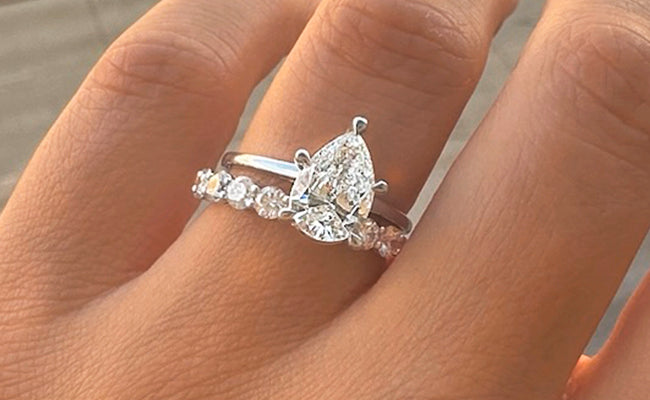
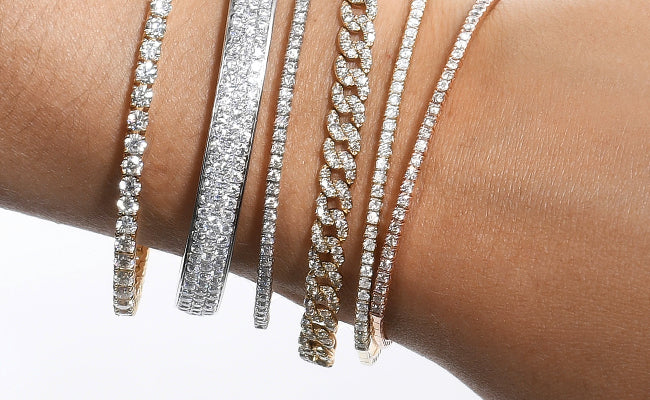
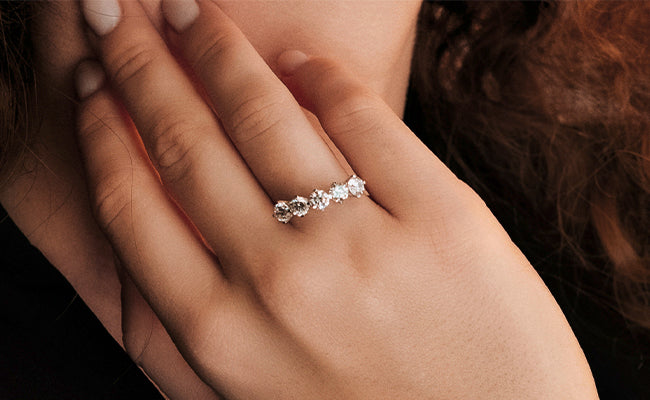
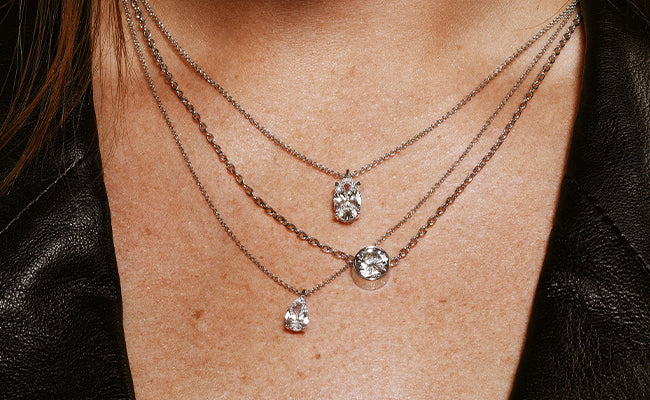
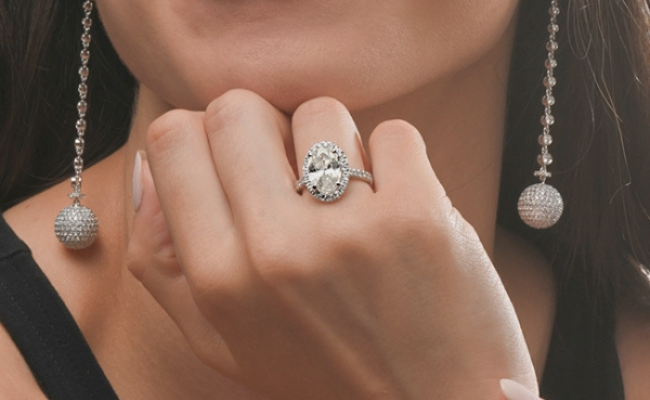
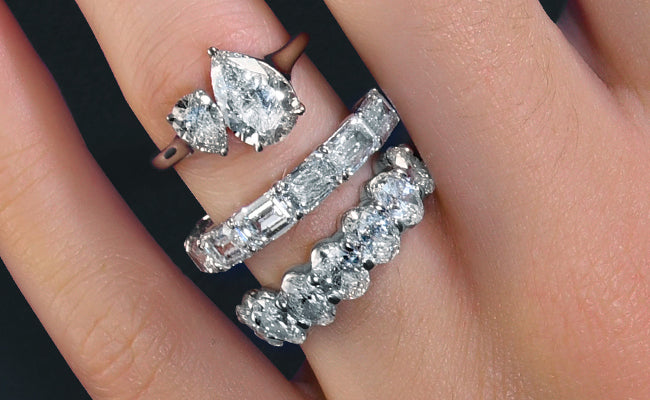

Natural diamond or lab-grown diamond? Which diamond fits your story?
An engagement ring accompanies one of the most personal moments in life. And anyone choosing a diamond today is often faced with a new question:
Should it be a natural diamond or a lab-grown diamond?
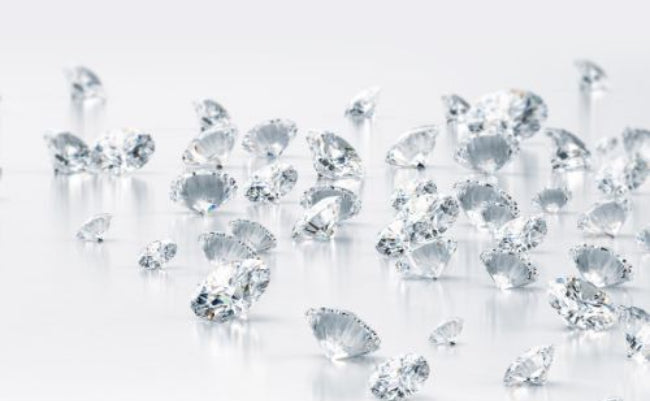
Visually, both can be beautiful. A lab-grown diamond is also a real diamond and possesses essentially the same chemical, physical, and optical properties as a natural diamond.
The decisive difference, therefore, lies less in the sparkle.
It lies in the formation and the history of the stone.
A natural diamond was formed deep within the earth over an unimaginably long period of time. A lab-grown diamond, on the other hand, is created by humans under controlled conditions.
Which variant is the right one depends on what is important to you for your engagement ring.
For some couples, size and budget are the main focus.
For others, it is the origin, natural rarity, and the idea of creating a piece of jewelry that might one day become a family heirloom.
What is the difference between a natural diamond and a lab-grown diamond?
The short answer:
Both are diamonds - but they have different origins.
A natural diamond is created through natural geological processes deep inside the earth. Its formation began in some cases billions of years ago.
A lab-grown diamond – often also called a lab-created diamond – is produced with the help of modern technology in a controlled environment.
After cutting, both can look very similar to the naked eye.
Precisely for this reason, the decision should not be based solely on which stone sparkles more.
Much more important is the question:
What meaning should your diamond have for you?
The special idea behind a natural diamond
There is something fascinating about a natural diamond.
The stone existed long before we were born.
Long before our cities existed.
Long before two people met who would eventually decide to spend their lives together.
And eventually, this exact stone becomes part of an engagement ring.
Something billions of years old suddenly becomes a symbol of a new beginning.
For many people, there is a special emotional significance in this.
A natural diamond was not produced for a specific person. It is a piece of nature that is found, selected, and finally becomes part of a personal story.
Why a Canadian natural diamond tells yet another story ...
When it comes to natural diamonds, many of our customers today want to know not only how beautiful the stone is, but also:
Where does my diamond come from?
This is precisely where Canadian natural diamonds play a special role.
At Barry’s Jeweler, we work with Canadian Maple Leaf Diamonds™, among others. The origin of these natural diamonds is documented and traceable.
Selected Maple Leaf Diamonds™ carry an individual identification or tracking number and are offered with a certificate of origin.
In this way, the natural history of the diamond is combined with a very modern need:
Transparency.
You are not just buying any natural diamond.
You know that your diamond is of natural origin and comes from Canada.
Especially with a piece of jewelry that may be worn for a lifetime, this knowledge can take on a special significance.
An engagement ring as a future family heirloom
When buying an engagement ring, one first thinks of the proposal.
Of this one moment.
But a high-quality ring can accompany us far beyond that.
Perhaps it will be worn for decades.
Perhaps it will see weddings, birthdays, travels, and family celebrations.
Perhaps it will be passed on one day.
To a daughter.
To a son.
To a granddaughter or grandson.
And then, it is suddenly no longer about which diamond was currently fashionable.
Then the story counts.
Imagine someone holding your ring in their hands many decades later and hearing:
“Your grandfather proposed to me with this ring back then.”
That is exactly how family heirlooms are created.
Not by a specific price.
But through time, memories, and meaning.
For some people, a natural diamond reinforces this feeling even further.
Because the stone itself already carries an exceptionally long history before your own family history begins with it.
Does a natural diamond feel different from a lab-grown diamond?
Physically?
Not necessarily.
Emotionally?
For some people, very much so.
Because jewelry does not become valuable solely through its materials.
The grandparents' wedding ring is not special because it consists of a certain amount of gold.
An old watch is not loved because it tells time more accurately than a new one.
And an inherited ring does not mean so much to us because its gemstone has a certain carat weight.
What we pass on are stories.
For people who value origin and natural formation, a natural diamond can therefore also feel different.
The thought:
This diamond existed long before me. Now it accompanies my story – and perhaps one day that of my family.
can be very emotional.
That does not mean that a lab-grown diamond cannot have emotional meaning.
Of course, a lab-grown diamond can also become part of a family heirloom.
Because, in the end, it is people who give a piece of jewelry meaning.
But the story behind the stone is different.
What are the arguments for a lab-grown diamond?
Lab-grown diamonds have quite rightly found many interested buyers in recent years.
They offer one particular advantage:
Within a certain budget, it is often possible to choose a larger or higher-rated diamond.
Anyone looking, for example, primarily for an impressive stone with as much visible size as possible can find very interesting options with a lab-grown diamond.
Lab-grown diamonds are also real diamonds and can possess the same impressive brilliance as natural diamonds.
For many couples, the decision is therefore very consciously:
We want as much diamond as possible within our budget.
That is a completely legitimate decision.
What are the arguments for a natural diamond?
A natural diamond appeals particularly to people who value the following aspects:
Natural formation.
The diamond was created through geological processes in the earth and was not manufactured by humans.
Rarity.
Every natural diamond is a product of nature with individual characteristics.
Origin and history.
Especially with traceable Canadian diamonds, the origin can become part of the story of the piece of jewelry.
Symbolism.
A stone that was formed over an enormously long period of time can stand for consistency and endurance.
Family heirloom.
Anyone who consciously views an engagement ring as a piece of jewelry for generations may perceive the natural formation of the diamond as an additional emotional value.
Natural diamond or lab-grown diamond: which is better?
There is no universally valid answer to that.
A lab-grown diamond can be the better choice if maximum size and brilliance within a certain budget are the priority.
A natural diamond can be the better choice if origin, natural formation, rarity, and the idea of a piece of jewelry for generations play a special role.
That is why, at Barry’s Jeweler, we do not first ask the question:
“Natural or Lab-Grown?”
We ask:
“What should this ring mean for you?”
Because only when we know your wishes, your budget, and your personal idea can we find out together which diamond suits you.
Why Barry’s Jeweler offers both options
We do not believe in giving every couple the same answer.
That is why you will find both engagement rings with natural diamonds and engagement rings with lab-grown diamonds at Barry’s Jeweler.
With our Canadian natural diamonds, we place special emphasis on origin and traceability.
As the House of the Canadian Maple Leaf Diamonds™, Barry’s Jeweler combines many years of experience with personal consultation on both natural and lab-grown diamonds.
In our boutique in the heart of Vienna, you can compare both versions yourself.
Not based on a photo.
Not based on a table.
But where the decision is usually made in the end:
on your own finger.
Frequently asked questions about natural diamonds and lab-grown diamonds
Is a lab-grown diamond a real diamond?
Yes. A lab-grown diamond is a real diamond. It possesses essentially the same chemical, physical, and optical properties as a natural diamond. The essential difference is its formation: it is created under controlled conditions, whereas a natural diamond was formed in the earth.
Can you distinguish a lab-grown diamond from a natural diamond with the naked eye?
Generally, not reliably. Special gemological examination methods are used for a reliable distinction.
Is a natural diamond automatically better than a lab-grown diamond?
No. Both variants satisfy different desires. Anyone who prioritizes size and budget can be very happy with a lab-grown diamond. Anyone who finds natural formation, origin, and rarity particularly important may tend to choose a natural diamond.
Why are Canadian natural diamonds particularly interesting?
Canadian natural diamonds can offer a traceable origin. At Barry’s Jeweler, the Canadian Maple Leaf Diamonds™ are an important part of our range in particular. The documented origin gives many customers additional confidence when choosing their diamond.
Which diamond is more suitable as a family heirloom?
In principle, any piece of jewelry can become a family heirloom if it is passed on through generations.
For some people, however, a natural diamond has an additional emotional dimension because it was formed in nature over an enormously long period of time.
It is precisely for this reason that some couples consciously choose a natural diamond when they view their engagement ring as a piece of jewelry for coming generations.
Should I choose a natural diamond or a lab-grown diamond for my engagement ring?
Ask yourself three questions:
What does the origin of my diamond mean to me?
Is maximum size within my budget particularly important to me?
Should my ring be a piece of jewelry for me that might be passed on one day?
The answers to these often lead more quickly to the right decision than a pure comparison of carat, color, and clarity.
The right decision is not just seen – it is felt
In the end, two diamonds may lie before you.
Both beautiful.
Both brilliant.
Both perfectly cut.
And yet, one of them may feel more "right."
Perhaps it is the lab-grown diamond, because you fall in love with its size and sparkle.
Perhaps it is the Canadian natural diamond, because you want to know where your stone comes from and because you are touched by the idea that something billions of years old becomes a symbol of your own shared future.
Both are personal decisions.
And that is exactly how the choice of an engagement ring should be.
Personal.
At Barry’s Jeweler, we therefore take the time to show you both possibilities and find out together which diamond should tell your story.
Perhaps you are not just choosing an engagement ring today.
Perhaps today the story of a future family heirloom begins.